
Plastics containing flame retardants are widely used in electronics, building materials, vehicles, and household products because they help prevent or slow the spread of fire. When these products reach end of life, responsible recycling ensures that valuable materials are not wasted and that their embedded safety benefits are retained.
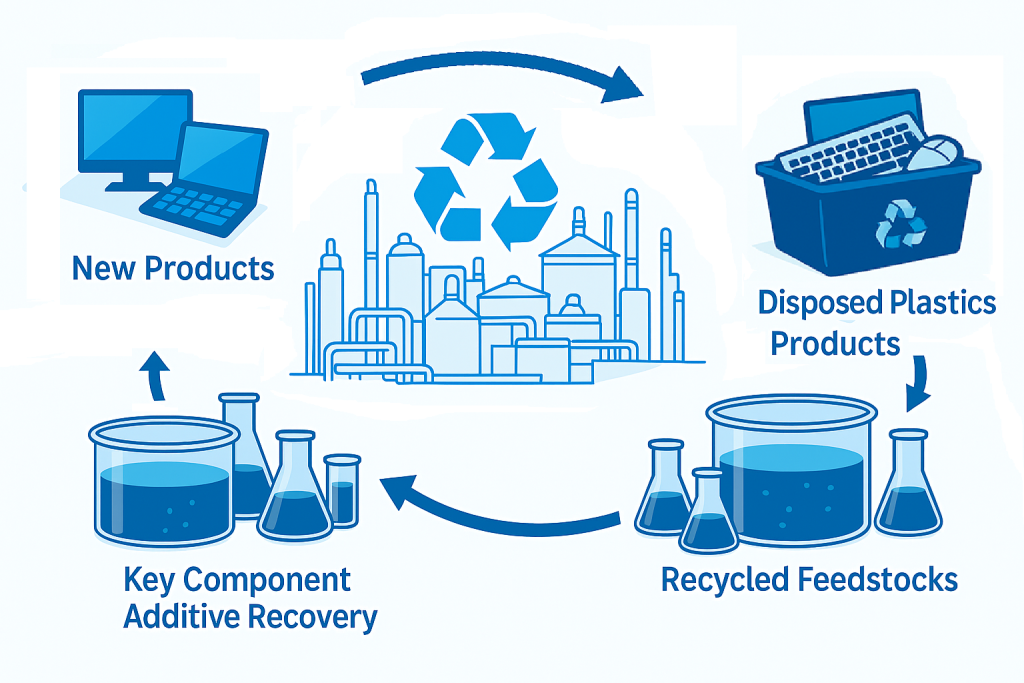
Circularity focuses on keeping materials in productive use through reuse, recycling, and recovery. Brominated flame retardant (BFR) chemistries support circularity by:
- Extending the useful life of durable products
- Preserving fire safety performance in recycled plastics
- Serving as chemical-recycling compatible additives to performance plastics
Why Flame Retardant Plastics Are Valuable in a Circular Economy
Initial studies demonstrate that innovative applications of mechanical recycling technologies can sort and recover plastics while maintaining performance properties, including flame retardancy, allowing recycled materials to be used again in applications that require high safety standards. Additional studies have demonstrated that BFR plastics are compatible with advanced chemical recycling technologies and can be among the materials recovered and reused from the process.
Supporting Responsible Stewardship and Supply Chain Resilience
Strong circular systems promote responsible stewardship. Collection and strategic sorting help ensure recycled materials are used appropriately and safely, aligning with product standards, use application needs, and environmental protections.
Circularity also supports supply chain resilience. By recovering polymers and additives from end of life products, manufacturers can reduce dependence on new resource extraction and help create more stable, domestic sources of raw materials.
Have a look at this video, which shows how NAFRA helps support new technologies to make plastics recycling of flame retardant plastics more efficient and sustainable:
Circularity Delivers Safety and Sustainability
- Recycling plastics with brominated flame retardants:
- Supports fire safety
- Advances sustainability goals
- Helps maximize material value over time
- A circular approach aligns sound science, innovation, and environmental responsibility
- Circularity helps build a safer, more resource efficient future
For a deeper dive into how smart chemistry and sound engineering allow flame-retarded plastics to be recycled and repurposed into new materials, check out this blog on new research being undertaken at Charles Darwin University.